ServicesAC Installation
AC Installation in Coeur d'Alene
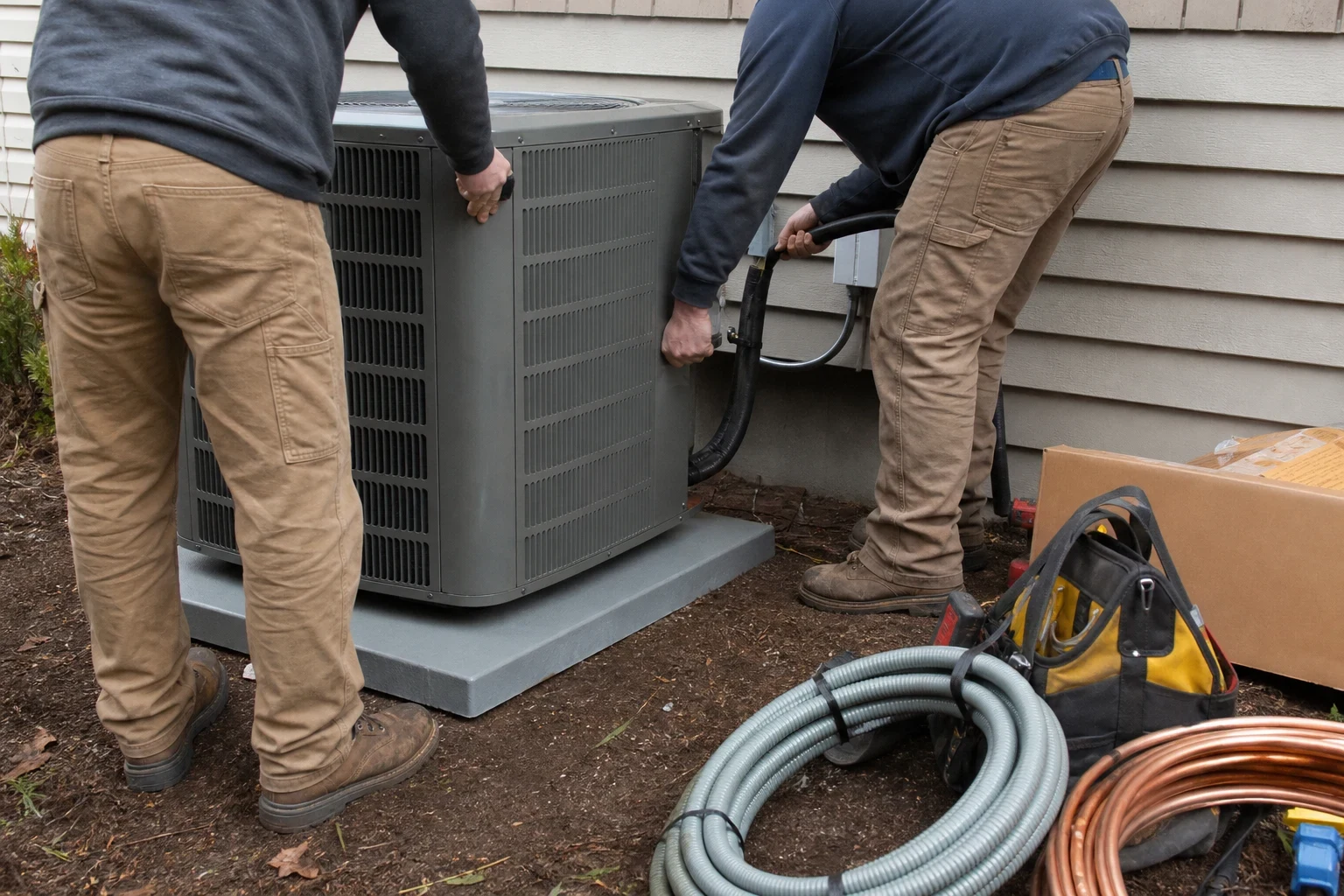
We install central air conditioning that is sized to your home, matched to the furnace you already have, and set up so it runs quietly for years. If your current system can still be repaired sensibly, we will tell you that first.
When a new air conditioner is the right call
Many air conditioners that fail can be fixed, and our AC repair visits often end that way. Installation makes sense when the unit is old enough that parts are scarce, when the repair would cost a large share of a new system, or when your home never had central air at all.
A good installation is mostly about decisions made before the equipment arrives. We measure your home, look at the furnace or air handler the new coil will sit on, check the electrical panel and plan where the outdoor unit and refrigerant lines will go. That planning is what keeps a system from short cycling, running loud or leaving upstairs rooms warm.
Summers here bring hot, dry afternoons and stretches of wildfire smoke when windows stay shut, so a system that holds a steady temperature with good filtration earns its keep.
What your installation includes
- A measured load calculation
- We size the system from your home's square footage, windows, insulation and orientation. Rules of thumb tend to oversize, and an oversized unit cools fast but leaves the air clammy and wears itself out.
- Matched indoor and outdoor equipment
- The outdoor condenser and the indoor coil are chosen to work together and to fit your existing furnace. A mismatched pair loses efficiency you paid for.
- A level pad and clean line set
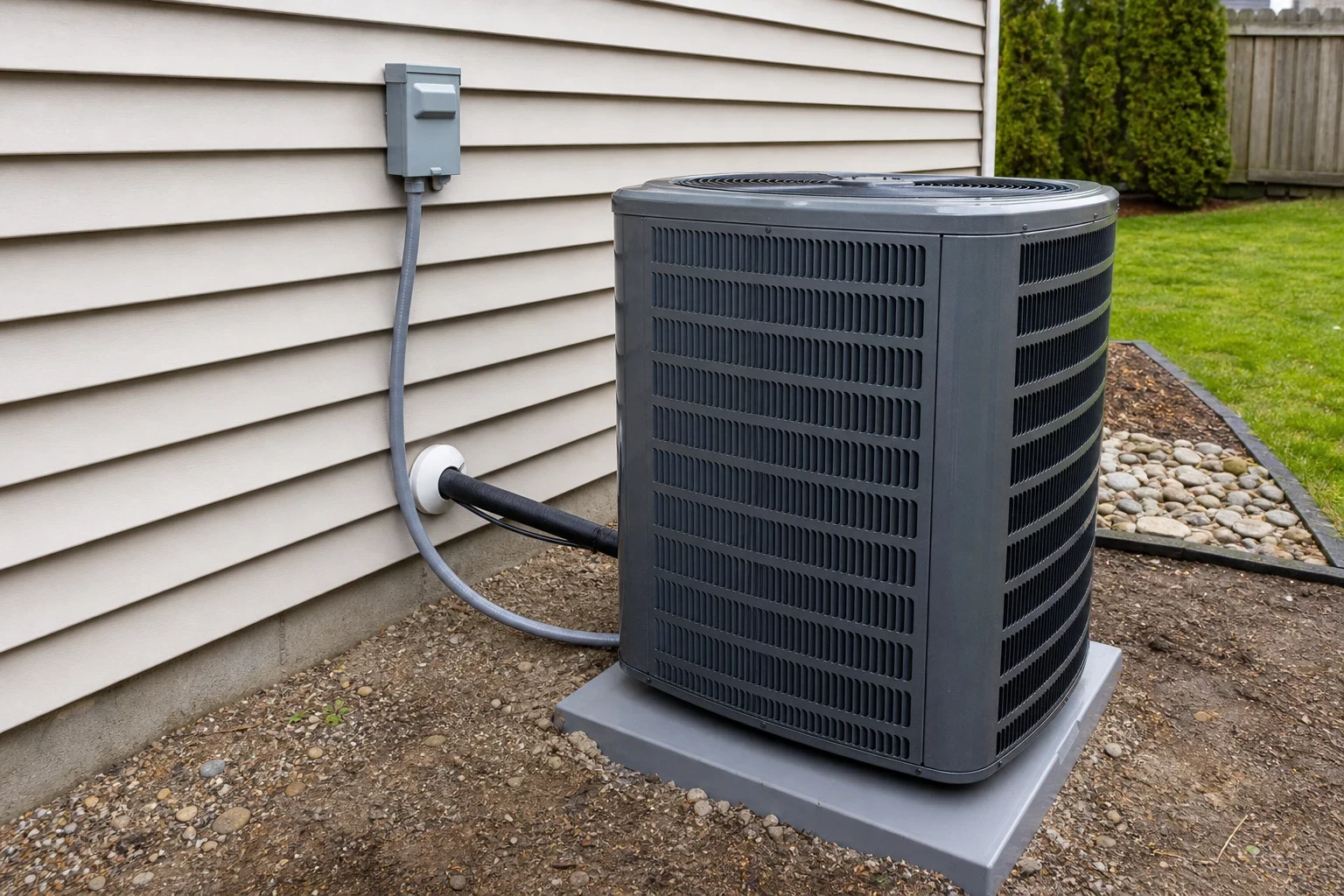
- We set the condenser on a level pad with proper clearance, run insulated refrigerant lines neatly along the house and seal every wall penetration.
- Electrical and thermostat connections
- We install the outdoor disconnect, confirm the circuit is sized correctly and connect or upgrade the thermostat so the new system is controlled properly.
- Refrigerant charge set by measurement
- After evacuating the lines with a vacuum pump, we charge the system and verify it with pressure and temperature readings rather than guessing.
- Removal and cleanup
- We recover refrigerant from the old unit, haul it away and leave the work areas inside and out as we found them.
Signs it may be time to replace your AC
Repairs keep stacking up
One repair is normal. When you are calling us every summer for a new part, the money is usually better spent on a system that will not need them.
An older refrigerant system
Older units charged with R-22 depend on a refrigerant that stopped being manufactured, so topping one off has become costly. A leak in a system like this often settles the question.
Rooms that never cool evenly
If some rooms stay warm no matter the setting, the unit may be undersized or failing. We check the equipment honestly before suggesting anything new.
Rising bills with no change in use
A worn compressor draws more power for less cooling. A noticeable jump in summer electric bills is worth a look.
No central air yet
Plenty of homes were built with a furnace and nothing for summer. If yours has a forced-air furnace, adding central air is often straightforward.
What affects the cost of a new AC
No two installations are priced quite the same, because no two homes are. Estimates are free on installations and replacements, and the written quote shows exactly where the money goes. These are the factors that move the number most.
System size
A larger home needs more cooling capacity, and capacity drives equipment cost. Sizing correctly also avoids paying for more unit than you need.
Efficiency rating
Higher SEER2 ratings cost more up front and less to run. We help you weigh that against how much you actually use air conditioning.
Your furnace and electrical panel
The new coil has to fit your furnace, and the condenser needs a properly sized circuit. An older furnace or a full panel can add work.
Where the condenser goes
The distance from the outdoor unit to your furnace sets how much refrigerant line we run. Narrow side yards, decks and hard-to-reach wall openings add labor and material compared with a short, open path.
From estimate to first startup
- 1
Free estimate at your home
We come out, take measurements and look at your existing equipment. If a repair would do the job, we tell you. If not, we go over the options and the reasons.
- 2
Quote in writing
Before work starts you get a written quote listing the equipment, the labor and anything else the job needs. Nothing gets added later unless you agree.
- 3
Permit and install date
Where a permit is required, we pull it, and we book an installation day that suits you.
- 4
Install day
The crew protects the floors on the way to your furnace, disconnects and removes the old equipment, then sets the new coil and outdoor condenser and runs the lines and wiring. Replacing an existing system is usually a one-day job.
- 5
First run and walkthrough
With everything hooked up, we run the system long enough to confirm it cools as designed. We then review the thermostat settings, show you where the filter goes and how often to change it, and answer every question before we leave.
AC installation questions
How do I know whether to repair or replace my air conditioner?
We look at the unit's age, its refrigerant type, the cost of the repair and how it has been running. If a repair makes sense, we recommend it. If a new system is the better investment, we explain why in plain terms and let you decide.
Do I need a new furnace at the same time?
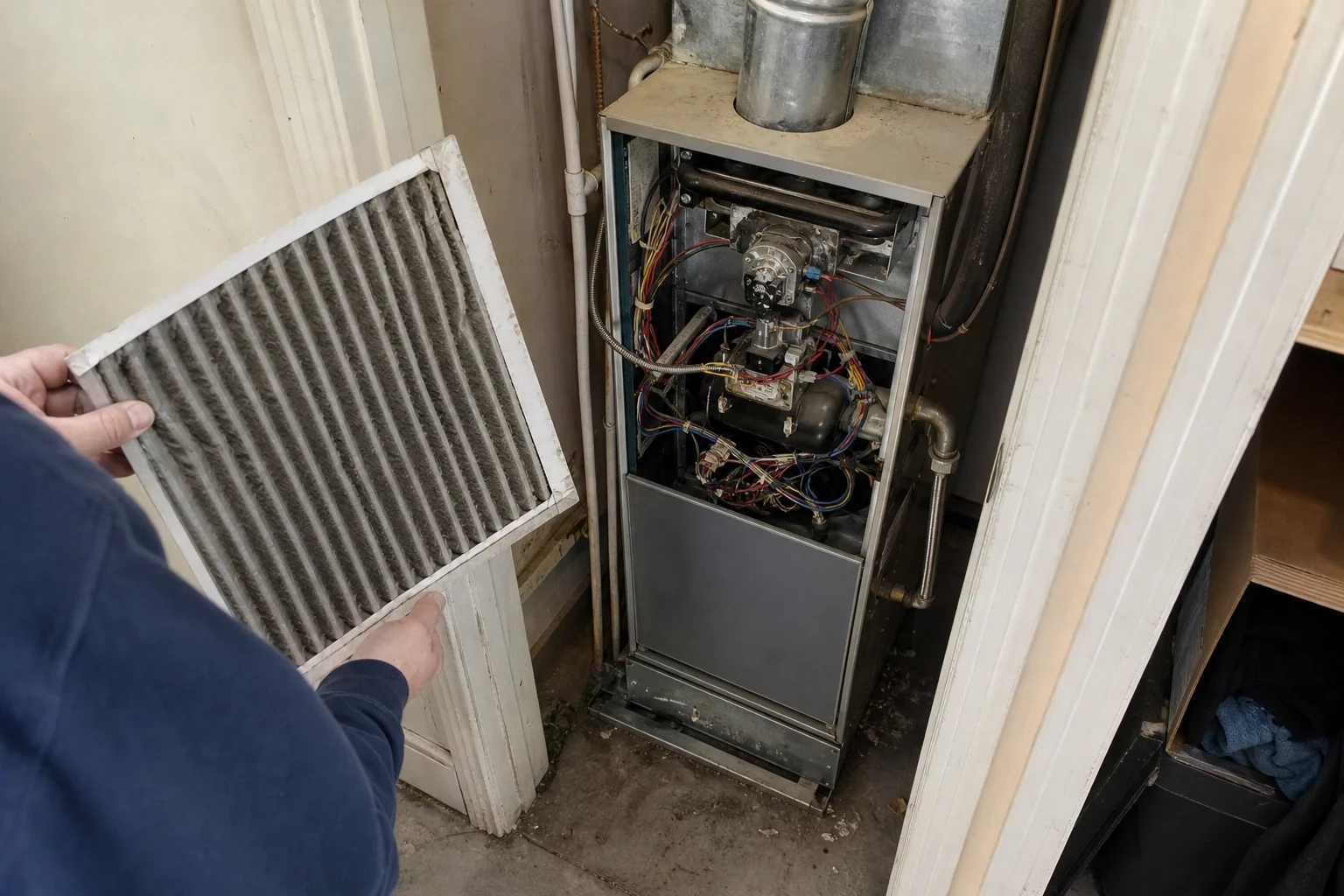
Not always. The new coil sits on your furnace and uses its blower, so we check that the furnace is in good shape and compatible. If it is nearing the end of its life, we will mention it, and our furnace installation page covers that work.
Should I consider a heat pump instead?
A heat pump cools like an air conditioner and also heats through the milder spring and fall months. For many homes it is worth comparing side by side. Heat pumps can qualify for Avista rebates and federal tax credits, and if you go that route we walk you through claiming them. We are glad to quote both systems so the difference is clear.
My home has no ducts. Can I still get air conditioning?
Yes. Ductless mini-splits mount on the wall and cool rooms without any ducts. We can walk through that option during your estimate.
How disruptive is installation day?
The bulk of the job takes place in the yard and around your furnace. We cover the floors we walk on, keep tools and old parts contained and tidy up before leaving, so the rest of your home stays usable all day.
Talk through a new system with us
We serve Coeur d'Alene, Hayden, Post Falls and nearby towns. Tell us about your home and current equipment, and we will set up a time to measure and give you a straight answer.