ServicesAC Repair
AC Repair in Coeur d'Alene
An air conditioner that quits on a hot afternoon usually has one failed part, not a failed system. We locate that part, walk you through the evidence and write up the cost before a single wire is touched. When repair stops making sense, we explain why and leave the decision with you.
Most AC Failures Are Fixable
A central air conditioner is a handful of parts working together: a compressor, a fan, coils, a capacitor and a contactor, plus a thermostat and a drain line inside. When one wears out, the whole system can stop. That rarely means the whole system is finished.
Our approach is simple. We measure first and decide second, we repair what is worth repairing, and we explain in plain terms when a unit has reached the point where a new one is the better use of your money. Hot, dry stretches in July and August are when weak parts finally give out, and that is when an honest answer matters most.
If replacement is the right call, our AC Installation page covers how that works. Most visits end with a repair.
What We Check on an AC Repair Call
- Electrical testing
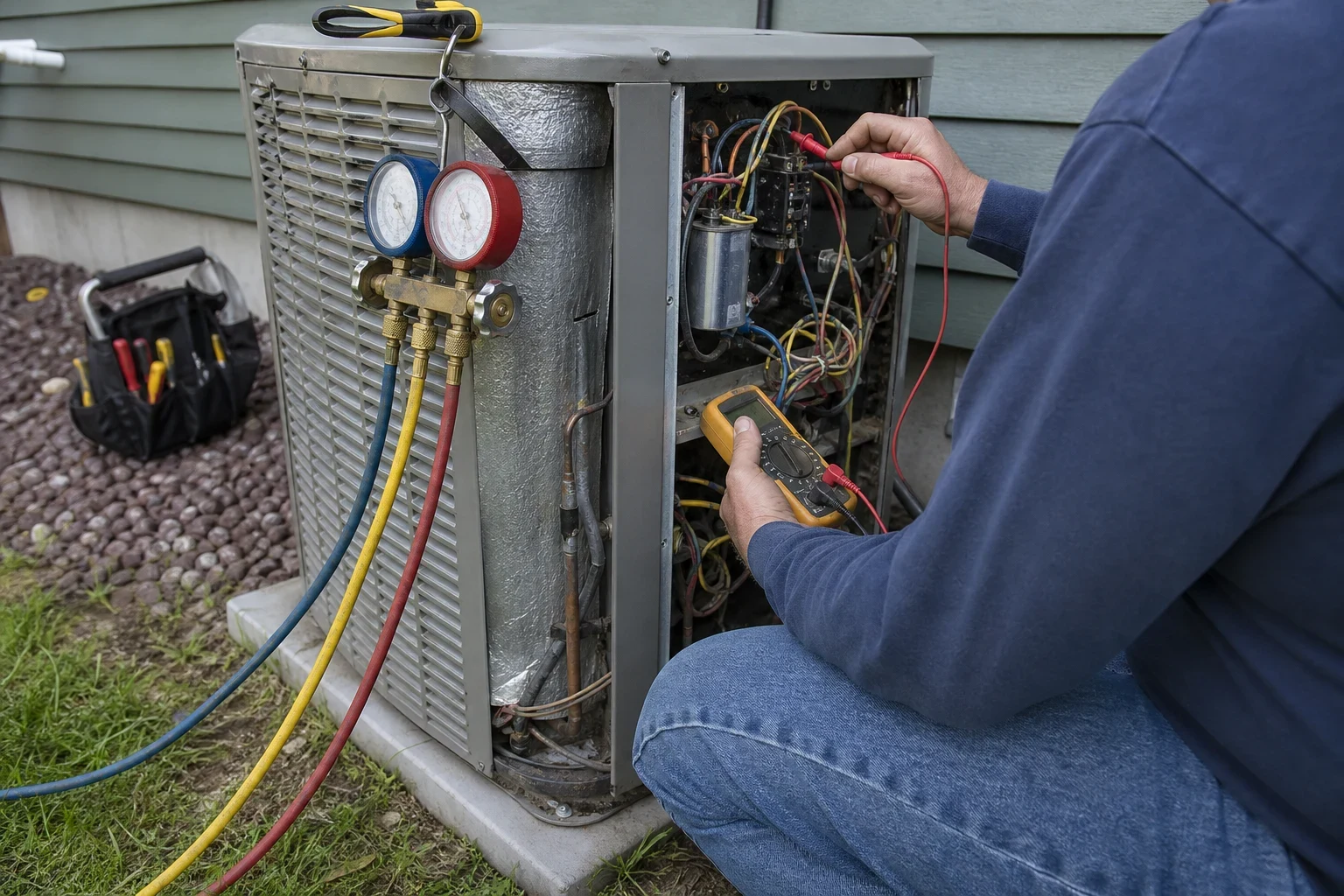
- At the outdoor unit we meter the capacitor, contactor and wiring. A bulging capacitor or a burned contactor is among the most frequent reasons a condenser hums without starting.
- Charge check and leak tracing
- Pressure and temperature readings tell us whether the charge is right. Refrigerant is not used up in a sealed system, so a low charge means a leak, and we find where it is rather than topping it off and hoping.
- Motors indoors and out
- The outdoor fan motor and indoor blower are checked for worn bearings, excess heat and weak start parts, and a motor on its way out gets replaced.
- Coil cleaning and airflow
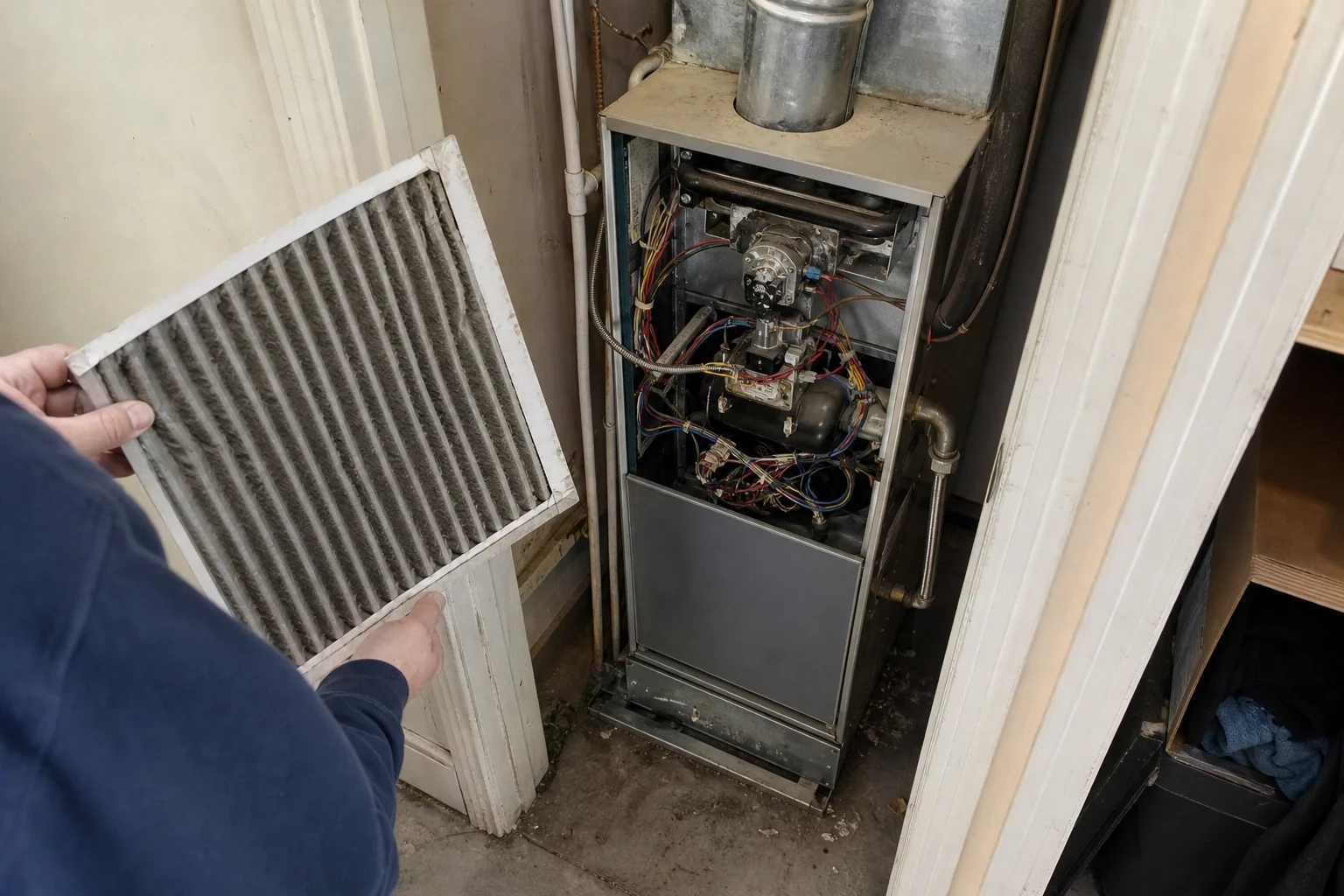
- Dirt packed in the condenser fins or on the evaporator coil makes the system run longer and cool less. We clean what needs it and check the filter and airflow at the indoor unit.
- Drain line and float switch
- A blocked drain can trip the float switch and stop the system, or send water onto a ceiling or floor. We clear the line and test the switch.
- Thermostat and control wiring
- Now and then the equipment is fine and the signal is the problem. We check that the thermostat is calling for cooling and that the low-voltage wiring is intact.
When Your Air Conditioner Needs a Repair
Vents blowing warm air
Air moves through the house but never feels cool. A dead capacitor, a stopped compressor or a low charge is usually behind it.
Condenser hums or clicks without starting
A hum with no fan turning generally means a failed electrical part. Switch the system off at the thermostat until we check it, so the compressor is not strained.
Ice on the refrigerant line
Frost on the outdoor copper line or the indoor coil points to poor airflow or a low charge. Set the thermostat to fan only so the ice melts before we get there.
A puddle near the indoor unit
Water collecting by the furnace or air handler usually comes from a clogged condensate drain.
Starting and stopping often
When the system turns on and off every few minutes, it wears out fast and seldom cools the house evenly.
Unusual sounds or odors
Squealing, grinding or a smell of hot wiring deserves a call while the part is still working.
What Happens on a Repair Call
- 1
Your phone call
Tell us what the system is doing and roughly when it went in, if you know. We book the visit, and repair calls are picked up at any hour.
- 2
Diagnosis on site
We begin at the thermostat, then test the indoor and outdoor equipment. Inside, we wear shoe covers and keep tools and parts off your floors.
- 3
Quote in writing first
Before any work, you get a written quote naming the failed part and why it failed. If the unit's age makes replacement worth considering, we tell you and set out both choices.
- 4
Fix and test run
Once you approve, we repair or replace the faulty part and watch the system cool your home through a full cycle. Before leaving we check the temperature drop across the coil and the pressures.
- 5
Tidy finish
We take the old parts with us unless you would like to see them, then explain what we did and what to watch for.
What Sets the Cost of an AC Repair
The bill mostly depends on which part failed and how hard it is to get to. Your diagnostic fee is credited toward the repair, so finding and fixing one problem is not billed twice. With no emergency or after-hours fees, a late-night or Sunday call costs the same as any other.
- The part that failed
- A new capacitor or contactor is at the bottom of the range. Fan motors cost more, and a compressor is the largest single repair an air conditioner can need.
- The refrigerant in your system
- R-22 is no longer made, so recharging an older system built for it is costly. Systems on R-410A or R-454B are easier to service.
- Where the leak is
- A leak at a flare fitting or service valve is often quick to fix. One inside the evaporator coil can mean a new coil.
- How easy the unit is to reach
- Indoor equipment tucked into a tight closet, attic or crawlspace takes more time than a furnace in an open basement.
AC Repair Questions
Something not covered here? (208) 980-2770
How do you decide between repair and replacement?
We look at the age of the system, the cost of the repair and the condition of the rest of the unit. A ten-year-old system with a bad capacitor should be repaired. A unit near the end of its life with a failed compressor and an R-22 charge is usually a different conversation, and we will explain the numbers so you can choose.
My older AC uses R-22. Can it still be fixed?
Often, yes. Electrical parts and motors can be replaced on an R-22 system like any other. The cost only climbs sharply when the repair involves adding refrigerant, and we tell you that up front.
Can you come at night or on a weekend?
Yes. Our phone is answered around the clock when cooling fails, and a Saturday night visit is billed the same as a Tuesday morning because we add nothing for emergencies or after-hours work. If your home has someone vulnerable to heat, mention it when you call.
Do I pay the diagnostic fee on top of the repair?
No. Once you approve the work, that fee is credited toward the repair and comes off the total. It only stands as its own charge if you choose not to go ahead.
How can I keep this from happening again?
Most failures start with dirt and worn electrical parts that a yearly tune-up catches early. Our Maintenance Plans page explains the tune-ups, repair discounts and priority scheduling that come with a plan.
Get Your Cooling Back
Tell us what your air conditioner is doing, and we will set a time to find the fault. You will know what failed and what the repair costs ahead of any work.