ServicesFurnace Repair
Furnace Repair in Coeur d'Alene
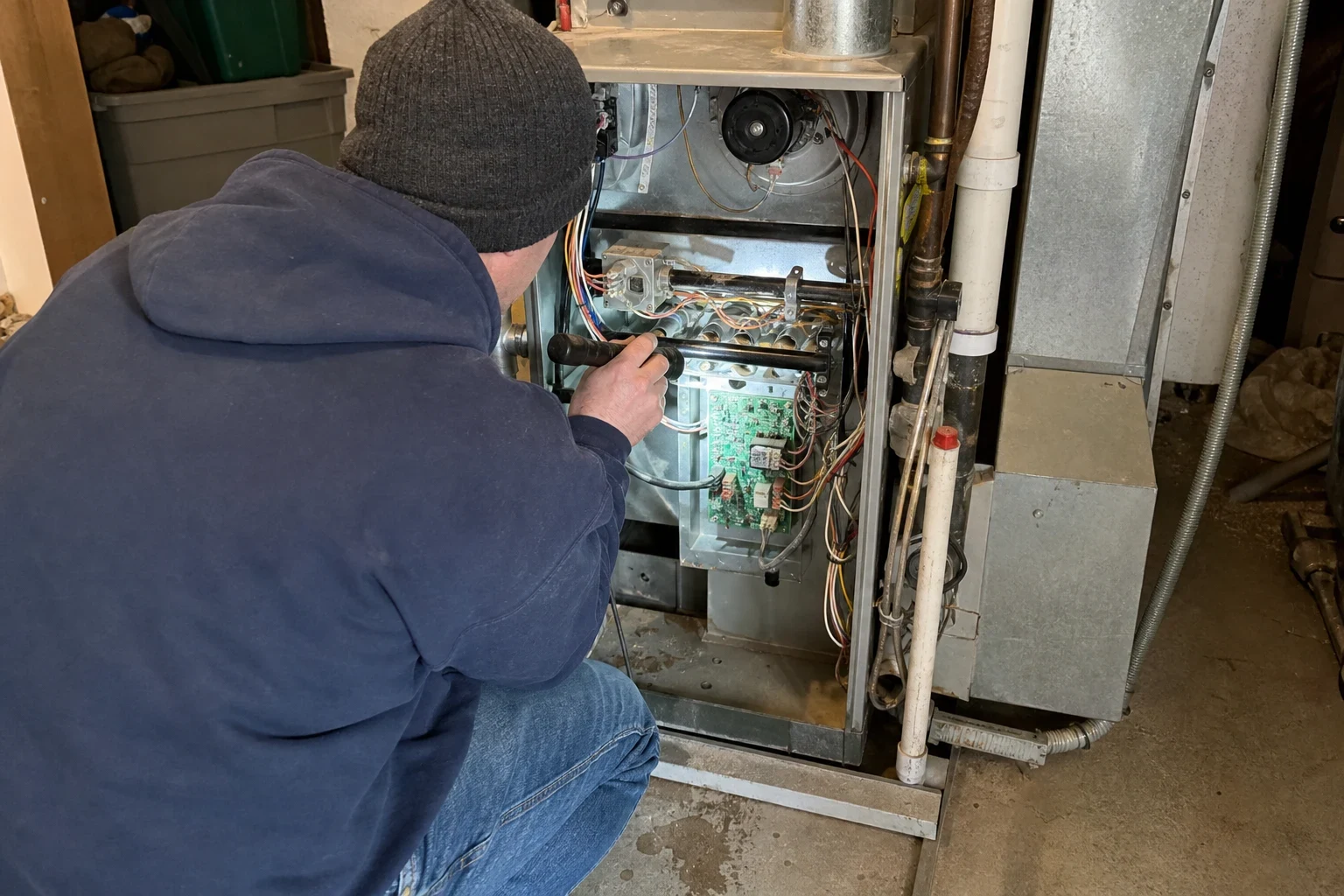
When the heat stops, we trace the reason. We test the furnace one component at a time, show you what failed and put the price in writing so nothing surprises you. Most furnaces we open are worth fixing, and we say so when that is true.
A careful repair, not a sales visit
Heating runs as a sequence. The thermostat asks for heat, a small inducer fan pulls exhaust up the vent, a switch senses that draft, the igniter glows, gas flows to the burners and a sensor confirms there is flame. If any step fails, the furnace shuts itself down. Our work is finding the step that stopped and putting it right.
Many no-heat calls trace back to one worn part, such as a coated flame sensor, a cracked igniter or a tired blower capacitor. On a furnace with years left in it, those are sensible fixes. We raise the subject of a new furnace only when the evidence points there, like a cracked heat exchanger or an aging unit whose parts are hard to find, and we show you what we saw so the decision stays with you.
What a furnace repair visit includes
- 01
A full diagnostic
We read the control board's fault codes, then confirm them with meter readings. A code points in a direction, and the measurements tell us which part actually failed.
- 02
Ignition and flame checks
We inspect the igniter, clean or swap the flame sensor and check gas pressure at the valve. The goal is a burner that lights cleanly and stays lit.
- 03
Airflow and blower service
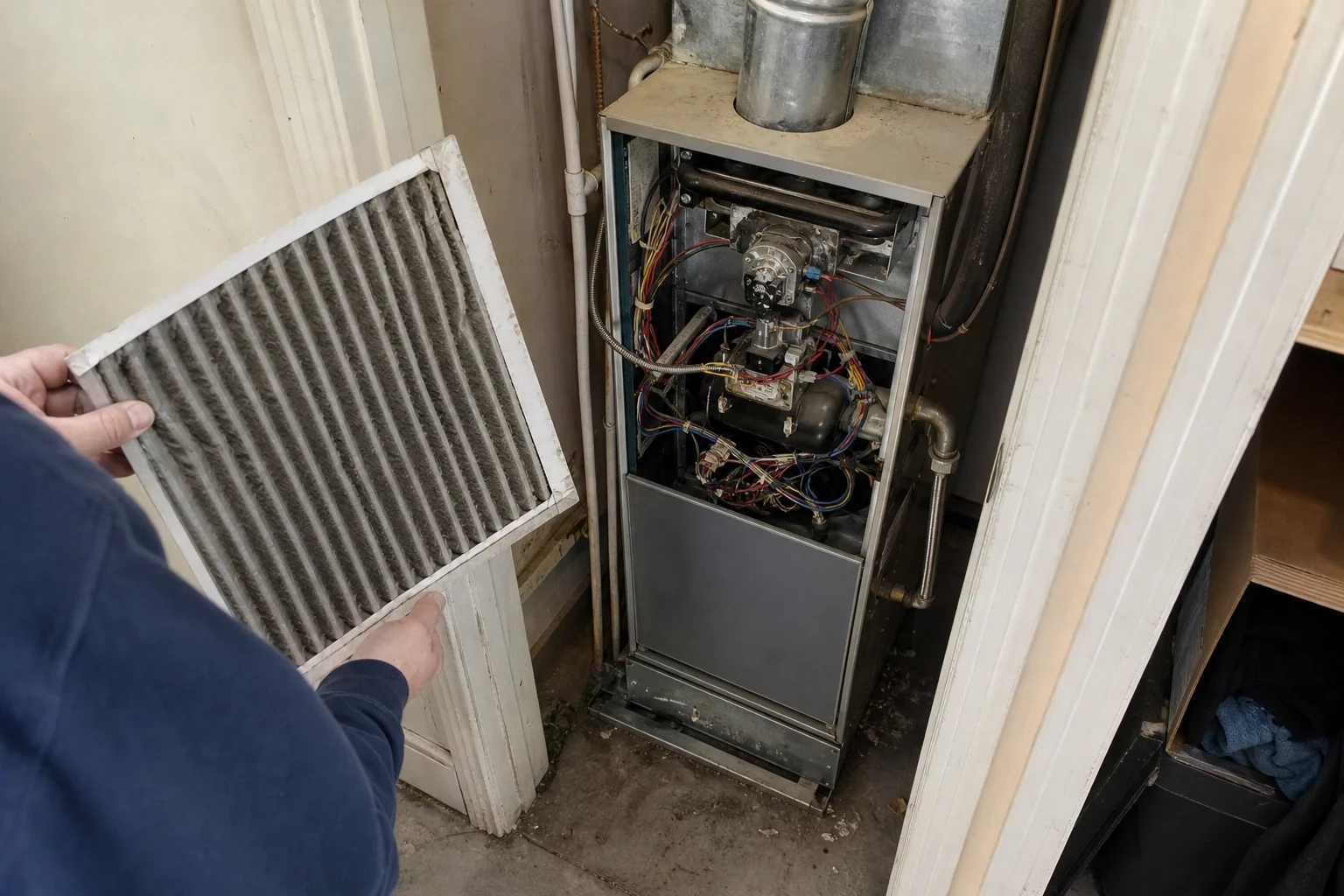
We check the filter, blower wheel, motor and capacitor. Restricted airflow can make a furnace overheat and switch off, so we look for the cause rather than the symptom.
- 04
Safety controls and venting
We test the high-limit switch, pressure switch and inducer motor, and look over the flue connection. On high-efficiency furnaces we clear the condensate trap and drain line.
- 05
Heat exchanger inspection
We look for cracks, rust-through and scorching. If we find damage, we show you photos and explain why it matters for carbon monoxide safety.
- 06
Testing and cleanup
After the repair we run full heating cycles and measure temperature rise across the furnace. We leave the area as tidy as we found it.
Questions about Furnace Repair?
Call(208) 980-2770Signs your furnace needs repair
Clicking with no flame
You hear the furnace try to start, but it never lights, or it lights and then drops out. This often points to the igniter, flame sensor or gas valve.
Short cycling
The furnace runs for a minute or two, shuts off and starts again. A dirty filter, a tripping limit switch or a failing sensor are common causes.
Blowing cold air
The fan runs but the air at the registers stays cool. The burners may not be lighting, or a safety control may have locked the system out.
New noises
Squealing, grinding or a loud rumble at startup usually means a motor bearing, a loose blower wheel or delayed ignition. Small noises tend to become bigger repairs if left alone.
A blinking light on the board
Most modern furnaces flash a fault code through a small window in the panel. Note the pattern before you reset anything, since it helps us diagnose faster.
Water around a high-efficiency unit
A blocked condensate line can trip the furnace off and damage the floor. In a hard Coeur d'Alene cold snap, a drain line that exits outdoors can also freeze.
How the repair goes, start to finish
- 1
You call us
Describe what the furnace is doing and any fault code you spot. A person picks up day or night, and we never add emergency or after-hours fees to the bill.
- 2
We diagnose
We cover your floors, open the furnace and work through its sequence of operation until we find the fault. Your diagnostic fee is credited toward the repair.
- 3
You approve a written quote
Nothing gets fixed until you hold the quote, with parts and labor listed line by line. If a new furnace would serve you better, we walk you through our reasoning and the choice stays yours.
- 4
We repair and test
We fit the part, run the furnace through several complete cycles and confirm safe, steady heat at the registers until we are satisfied it holds.
What affects the cost of a furnace repair
Two things drive most of the price: the component that gave out and the time needed to get at it and replace it. Because the quote is in writing up front, the number is settled ahead of any work. A call at night or on a weekend costs the same as one on a Tuesday morning.
- The failed part
- A flame sensor or capacitor is a modest repair. An inducer motor, control board or gas valve costs more in parts and time.
- Furnace type
- Two-stage and variable-speed furnaces use more specialized components than single-stage models, and those parts usually cost more.
- Reaching the furnace
- Units in a roomy utility space take less labor than ones squeezed into a narrow closet, crawlspace or attic, where panels and fittings are harder to work around.
- Age and parts availability
- Older units sometimes need parts that are hard to source. We tell you when that is the case so you can weigh it against the cost of a new unit.
Furnace repair questions
Is it worth repairing an older furnace?
Often, yes. Age alone is not a reason to retire a furnace that is otherwise sound. We look at the heat exchanger, how often it has needed work and how hard parts are to find, then give you an honest recommendation either way.
Do you charge more for nights and weekends?
No. Our emergency HVAC repair is available 24/7, and emergency or after-hours fees are simply not part of how we bill. The hour you call has no bearing on what the fix costs.
Can a cracked heat exchanger be repaired?
In practice, no. A crack can let combustion gases into the air in your home, and patching it is not a safe fix. If we find one, we show you the evidence and talk through your options, including furnace installation or a heat pump.
What should I do if I smell gas?
Leave your home right away without flipping switches, then call your gas utility from outside. Once the utility has made things safe, we can come diagnose and repair the furnace.
How long does a typical repair take?
Most repairs wrap up in a single visit once the fault is found. When a component needs to be special-ordered, we give you an expected arrival date and can often get some heat running safely while you wait.
Do you serve towns outside Coeur d'Alene?
Yes. We repair furnaces in Hayden, Post Falls, Rathdrum, Liberty Lake and Otis Orchards-East Farms as well as Coeur d'Alene.
Get your heat back the right way
Tell us what your furnace is doing, and we will come find the cause. You will have a written quote and a straight answer on fixing it or moving to a new system, with no work started until you agree.