ServicesDuctless Mini-Splits
Ductless Mini-Splits in Coeur d'Alene
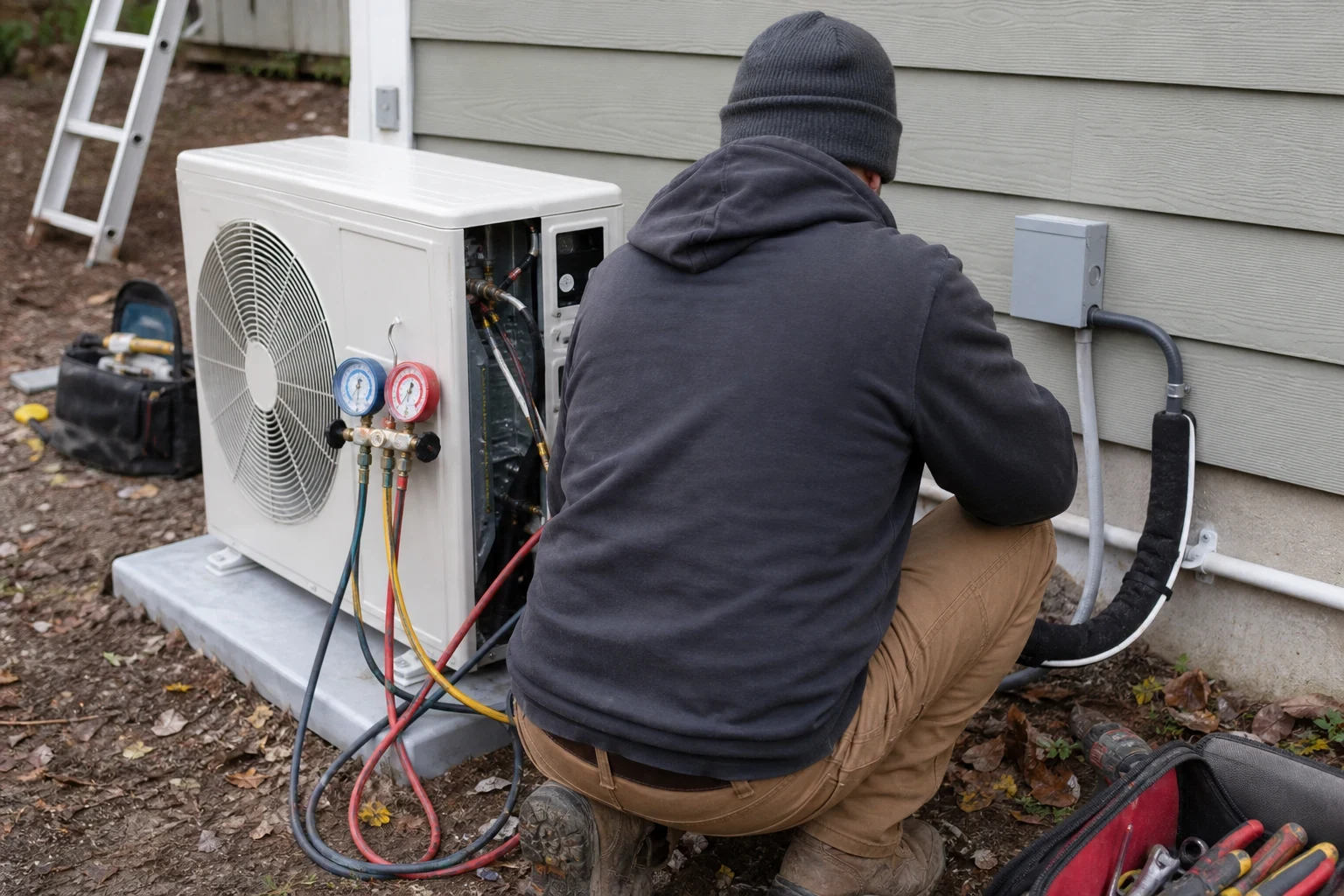
No ducts needed. A compact outdoor condenser feeds one or more slim indoor heads, each with its own setting. We fit every zone to its room and keep the lines tidy outside. If your existing unit is faltering, we tell you plainly whether fixing it makes more sense.
When a Mini-Split Is the Right Call
Mini-splits suit the spaces a central system handles poorly: a finished garage, a bonus room over the garage, a sunroom, a basement, or an older home that was never built with ducts. Each indoor head has its own thermostat, so the room you use most can be comfortable without conditioning the whole house.
They are also heat pumps. A modern cold-climate model keeps producing heat well below freezing, which matters through a long north Idaho winter. Many owners keep their furnace for the coldest nights and let the mini-split carry the shoulder seasons.
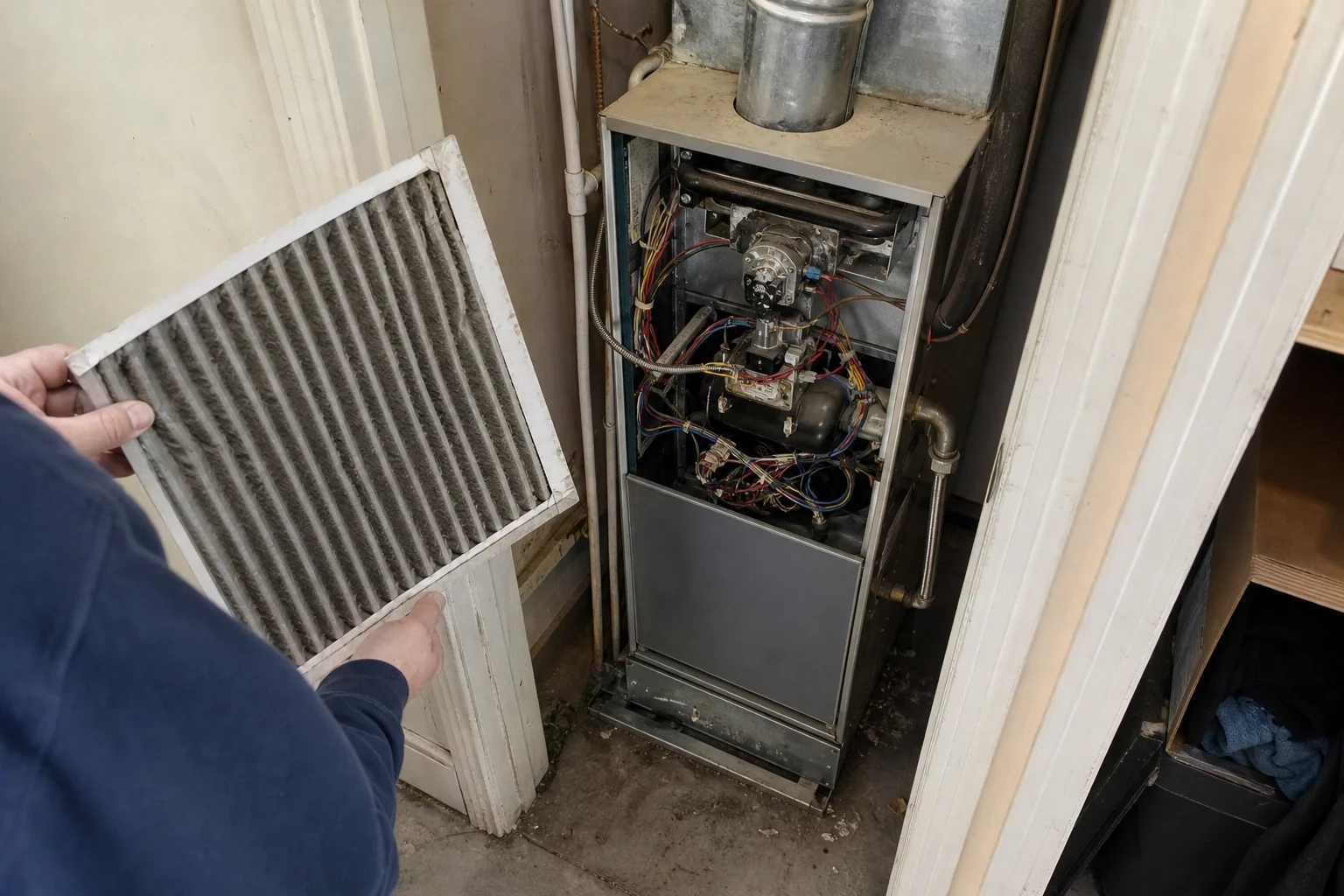
If you already have a unit, we look at it first. A clogged filter, a dirty coil or a failed sensor is a modest fix. When the compressor is gone on an older system, we explain why a new one is the better use of your money and show you what we found.
What the Work Includes
- A load check for each zone
- Equipment recommendations start with each room's floor area, window glass, insulation and which way it faces. A head that is too big for its space cycles on and off and leaves the air damp, so the numbers come first.
- Placement chosen with you
- Wall unit, ceiling cassette or low floor console: we discuss which style suits the room and where it should sit for even airflow. You see the spot marked and approve it, then we mount.
- Tidy line set routing
- Refrigerant lines, wiring and the drain share one small hole through the wall, sealed tight against wind and moisture. Outside, a paintable line cover can carry the run so it blends with your siding.
- Condenser set above the snow
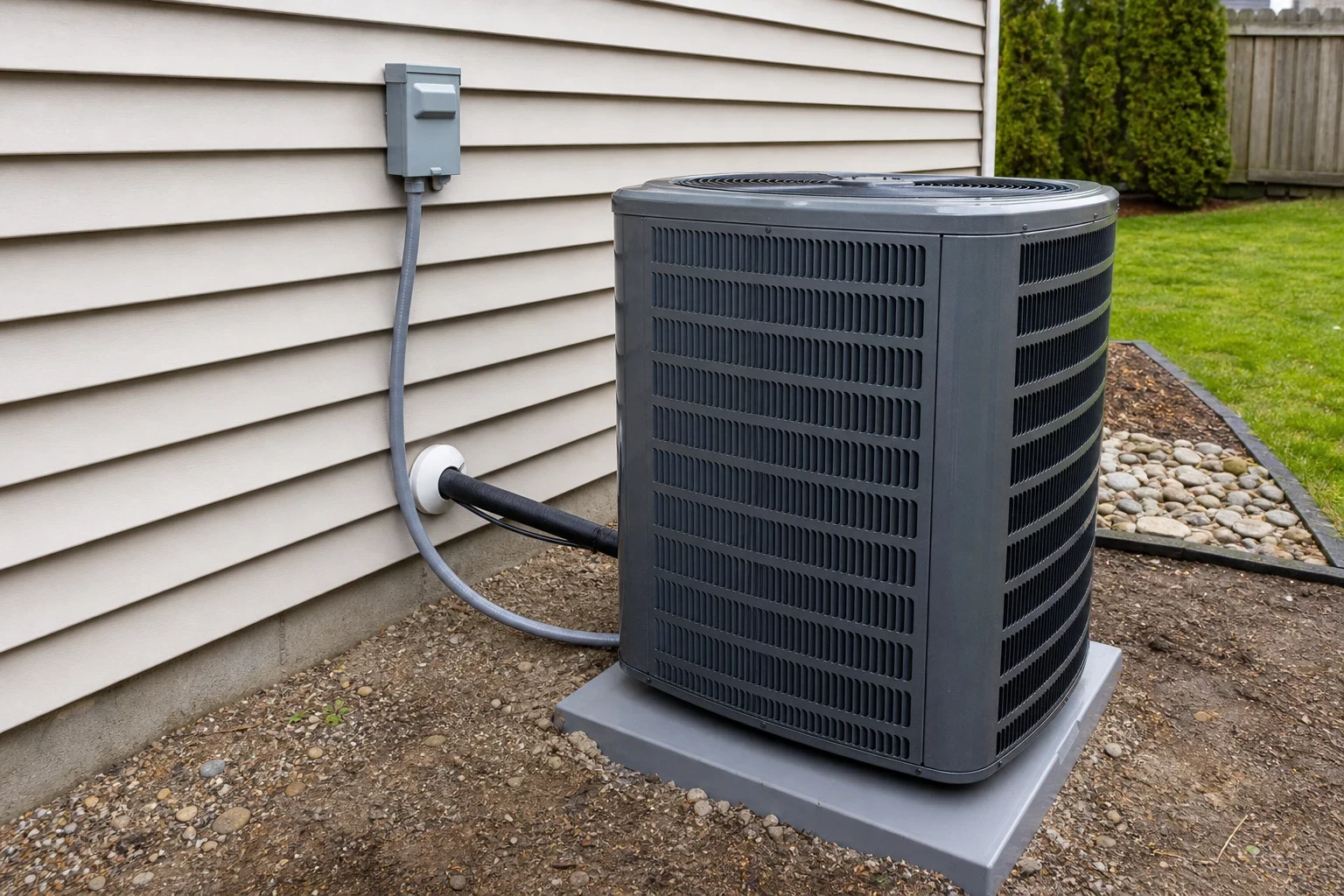
- The outdoor unit goes on a raised stand or wall bracket, out of the path of drifts and roof drip. Defrost water then runs off instead of building ice under the unit.
- Commissioning and handover
- Each system is pressure tested, evacuated and charged to spec, then every head runs in heating and cooling. Before we leave, you learn the remote and how to pull and rinse the filters.
- Repairs on units you already own
- Leaking heads, iced coils, error codes and lost heat are all things we track down and fix. We explain the cause in plain terms before replacing any part.
Signs a Mini-Split Makes Sense, or Needs Attention
A room that is always off
The office at the end of the hall or the bedroom above the garage that bakes in summer and chills in winter is often best served by a head of its own.
Leaning on portable heaters
Plug-in heaters and window air conditioners are noisy, costly to run and a nuisance to store. A mini-split replaces both with one quiet, efficient system.
New space with no ducts
Stretching ducts into an addition or a converted attic is often impractical. A ductless head heats and cools it directly.
Drips below an indoor head
The usual cause is a clogged drain line or a coil overdue for cleaning. It is a straightforward fix, and dealing with it soon spares your drywall and flooring.
Flashing lights on the unit
Those blink patterns are diagnostic codes. Many lead to a sensor or a wiring fault between the units, not a costly component.
How an Installation Day Runs
- 1
A free look at your home
Installation and replacement estimates cost nothing. We walk the rooms, check the outside wall where the condenser would sit and look over your electrical panel. You get a written quote before any work starts.
- 2
Covers down, locations agreed
Drop cloths go down along our path, furniture is shifted as needed, and we confirm each head and line location with you. Only then do we drill.
- 3
Install and connect
We level and mount the heads, run and seal the lines and drain, then set and wire the condenser. Most single-zone installs finish in one day.
- 4
Run it, tidy up, show you
Both modes are tested, the work area is vacuumed, and we finish by going over everyday use and filter care with you.
What Sets the Price
Your cost depends on the house itself and how many rooms you want heated and cooled. The written quote shows equipment and labor on separate lines, so you can see where every dollar goes. Every mini-split is a heat pump, so yours may be eligible for Avista rebates and federal tax credits, and we help you with the claim paperwork.
- Number of rooms
- One indoor head on its own outdoor unit is the simplest setup. Each extra room adds a head, a line set and more labor, or calls for a bigger multi-zone condenser.
- Cold-climate or standard model
- Cold-climate units cost more to buy but hold their heating output on the most frigid nights. We give you a straight answer on whether your plans need one.
- How far the lines run
- Going straight out through an exterior wall is fast. Running lines through an attic, between floors or across a long distance takes more material and more time.
- Electrical service
- Most systems need their own circuit and an outdoor disconnect. How much work that involves comes down to the room left in your electrical panel.
Mini-Split Questions
Something not covered here? (208) 980-2770
Can a mini-split heat my home through winter?
Yes, if it is a cold-climate model. These keep producing heat well below zero, and in a tight, well-insulated space one can serve as the main heat. In bigger or older houses we usually recommend keeping the furnace as backup for the deepest cold. We make that call after seeing the house.
How loud are they?
Very little indoors. On low, a head is often quieter than a kitchen refrigerator. The condenser outside sounds about like any heat pump, and where possible we keep it away from bedroom windows.
Will the indoor head look out of place?
Wall heads are slim and plain white, and we choose a spot that suits both airflow and the room. For some spaces, a ceiling cassette or a low floor console is a less visible alternative.
My mini-split stopped heating. Is it worth fixing?
Usually. Iced coils, clogged filters, bad sensors and drain issues are routine repairs. When an older unit has lost its compressor or main control board, we set the repair cost next to replacement and let you choose. If it quits on a freezing night, our emergency HVAC repair runs around the clock with no after-hours fees.
How often does it need service?
Pull and rinse the indoor filters about every four to eight weeks while the system is working hard. Once a year, have a technician clean the coil, blower wheel and drain so the unit stays efficient and free of musty smells. That annual visit is part of our Maintenance Plans.
Talk Through Your Rooms With Us
Tell us which rooms never feel right, and we will come measure and put a written quote in your hands. If a mini-split you already own is misbehaving, we start by finding out whether a repair will do.